



With nearly one in seven citizens aged 15 to 24 in 2024, Turkey faces a central challenge in bridging the divide between education and employment to support economic resilience and social cohesion. In addressing this issue, the country has implemented strategies that could hold useful insights and learnings for Europe’s overstretched healthcare systems as they grapple with issues such as staffing shortages and increased waiting times.
Vocational education at a crossroads
For decades, technical and vocational education and training (TVET) has offered young people a route to practical skills and stable careers. Yet as digitalisation accelerates and global competition intensifies, traditional models are falling short.In Turkey, more than one in five young people are classified as NEET, which is not in education, employment or training. There are similarly stark pictures across Europe: technical vacancies in healthcare infrastructure, construction and facility management remain persistently unfilled, while youth unemployment continues to challenge policymakers.

TVET students gaining practical experience under the guidance of a mentor at Gaziantep City Hospital
The labour market is grappling with a paradox: high youth unemployment coexists with a vast number of unfilled job vacancies. For İpek Ilıcak Kayaalp, Chair of the Board at Turkey-based investment company Rönesans Holding, this critical mismatch demands a fundamental overhaul.
The solution, she says, requires an urgent rethinking of the relationship between school and workplace, and between the public, United Nation organisations and private sectors: “In a world of rapid change, systems need the flexibility and dynamism that only cross-sector collaboration can provide.”
A new model takes shape
The “Safe and Supportive Learning Environments at Workplaces for TVET Students” programme, an ambitious initiative spearheaded by UNICEF in partnership with the Turkish Ministry of National Education, is an intervention designed to close these structural gaps. Its core strategy moves beyond traditional instruction, integrating young participants into real-world learning environments, forging a direct and seamless connection between classroom theory and workplace practice.Rönesans has become a major private sector partner in the “Safe and Supportive Learning Environments at Workplaces for TVET Students” programme. Gaziantep City Hospital – a state-of-the-art medical campus has become the testing ground. Here, 120 vocational high school students are gaining hands-on experience in fields ranging from software development and industrial automation to food services and facility maintenance.
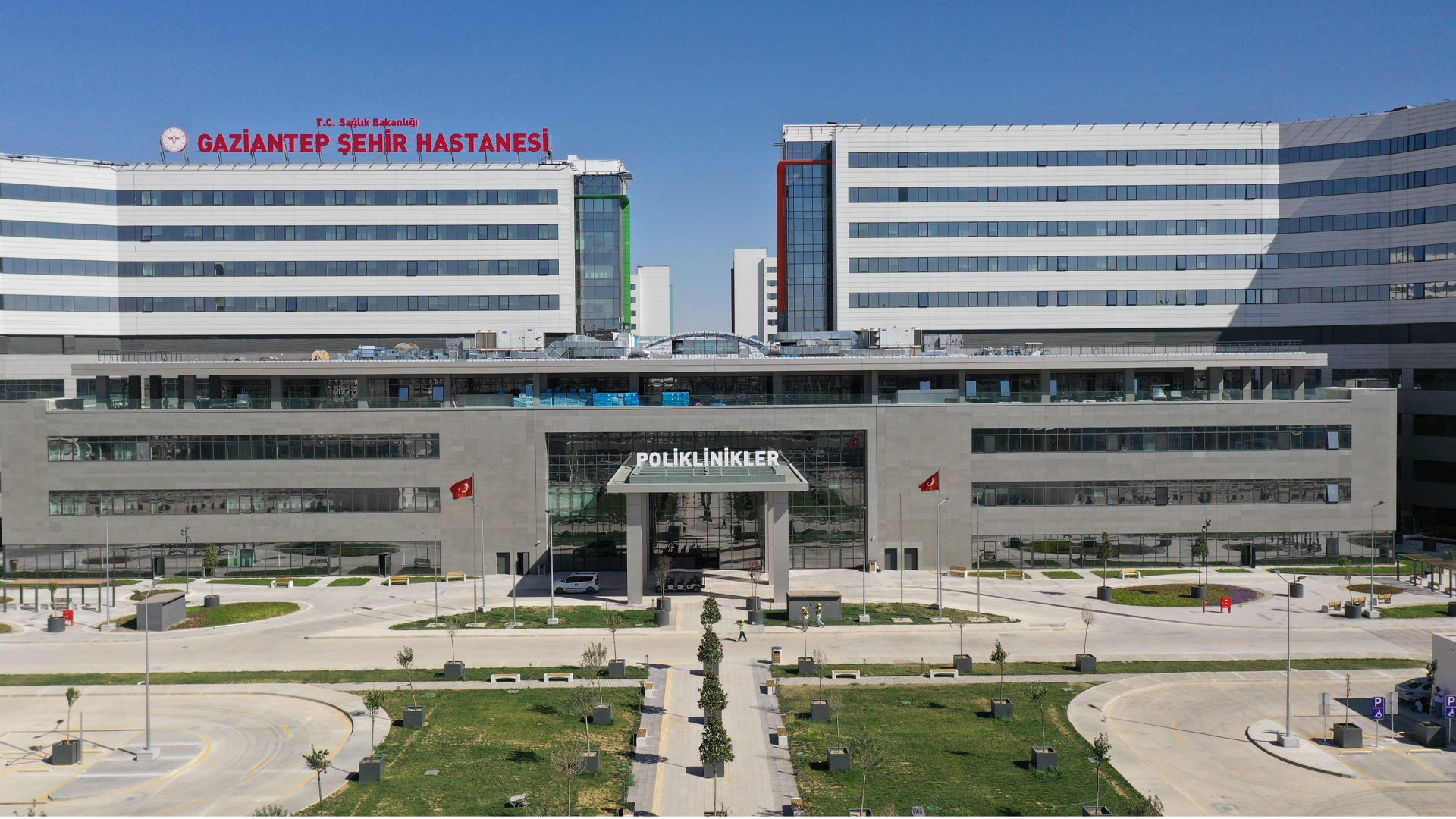
Gaziantep City Hospital, delivered by Rönesans in Partnership with Meridiam and Samsung C&T
“The NHS, for instance, has long struggled with shortages of skilled non-medical staff, a gap that places additional strain on clinical teams and undermines operational efficiency. European healthcare systems face comparable challenges, compounded by ageing populations and constrained public budgets.”
UNICEF Turkey representative Paolo Marchi explains that the organisation aims to help every young person reach their full potential by gaining the knowledge, skills and competencies they need. “This partnership does both,” he says. “The Ministry of National Education provides quality and inclusive vocational and technical education. And also leverages the expertise of private sector partners like Rönesans Holding to bring innovation and opportunity to young people.”
Importantly, the collaboration also strengthens the system beyond the directly targeted students. Updates to the TVET curriculum, improved safety and workplace-learning standards, and expanded teacher capacity will benefit a much larger number of TVET students across Turkey – helping ensure that relevant and future-proof skills become the norm, not the exception.
Lessons for Europe’s healthcare systems
The model is now attracting international attention, particularly from policymakers in countries grappling with similar workforce pressures. The NHS, for instance, has long struggled with shortages of skilled non-medical staff, a gap that places additional strain on clinical teams and undermines operational efficiency. European healthcare systems face comparable challenges, compounded by ageing populations and constrained public budgets.
For Kayaalp, the potential for cross-border learning is clear. “This isn’t just about Turkey. The model is designed to be adapted and scaled in diverse geographies. Wherever you are across the globe, the fundamentals should be the same: identify skills gaps, create pathways for young people and build genuinely collaborative partnerships.”
She adds: “This project is not only an educational initiative, but also a pioneering model of cooperation between the private sector, UN organizations and the public sector in Turkey – one that could serve as an example globally.”
Beyond skills transfer: a question of equity
The initiative also extends beyond skills transfer. “We see this as an opportunity to foster genuine equal opportunity and social mobility,” Kayaalp says. “By opening up our institutions, such as Gaziantep City Hospital, we help create pathways for young people from education to employment. That’s where lasting change begins.”A particular focus is placed on gender diversity. Despite operating in traditionally male-dominated sectors, the programme aims to ensure balanced representation among trainees, reinforcing the broader goal of inclusive access to opportunity.
Addressing systemic barriers
Turkey is experiencing socio-demographic dynamics that require focused attention on stable education and employment for young people. This challenge was amplified by the widespread impact of the February 2023 earthquakes. The damage to critical infrastructure resulting from the disaster has made it more challenging to maintain and expand opportunities for youth in the affected regions.“Following the earthquakes, our partnerships with organisations like UNICEF became even more vital,” says Kayaalp. “We saw first-hand how quickly access to education and support can be disrupted, and how essential it is to build resilient systems that can adapt and recover. We have already reached nearly 13,000 women and children through child- and women-friendly container cities established in the disaster zone, providing not only shelter but access to education and psychosocial support.”
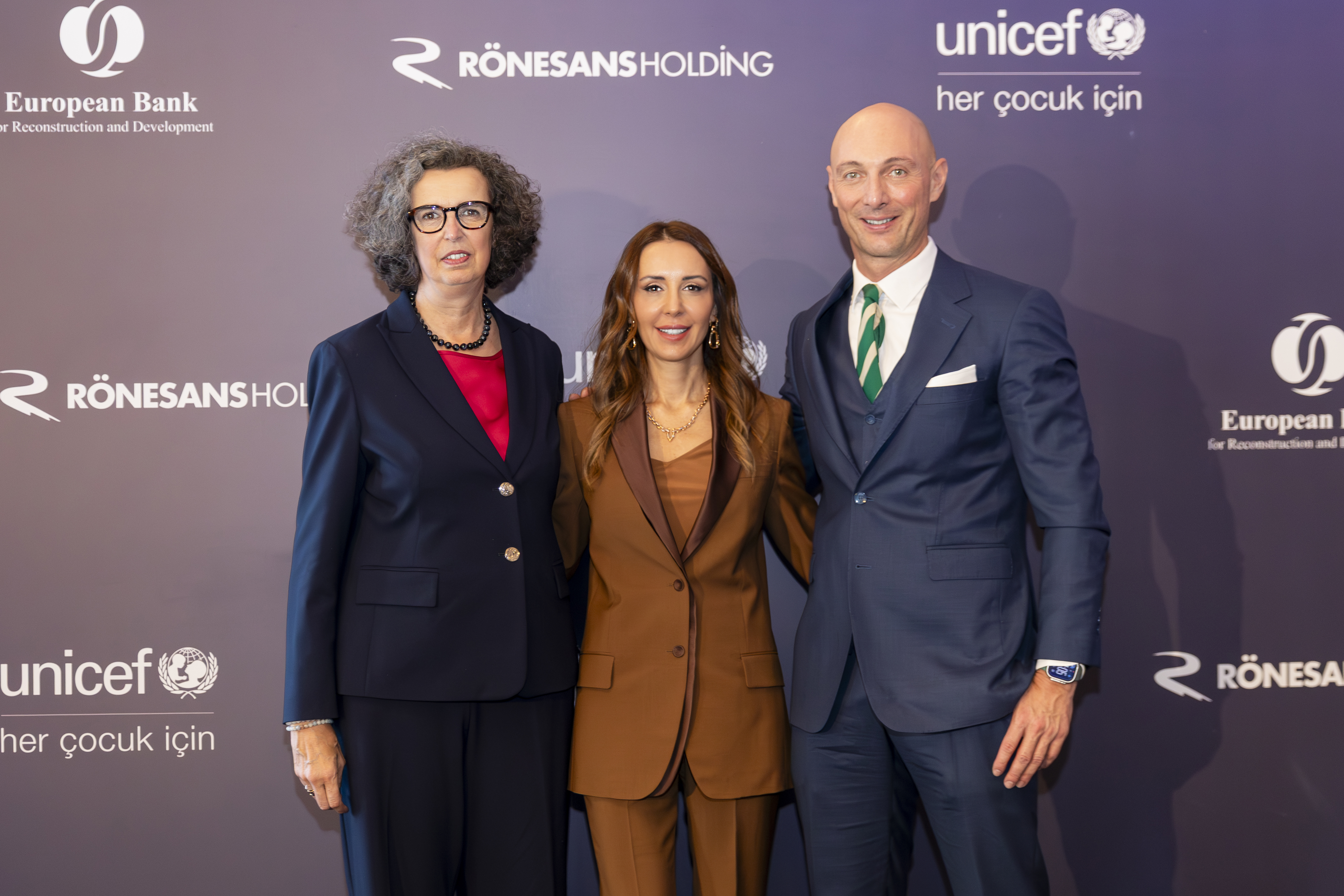
From left, Elisabetta Falcetti (EBRD Managing Director for Türkiye and the Caucasus), İpek Ilıcak Kayaalp (Chair of the Board of Rönesans Holding), Paolo Marchi (UNICEF Türkiye Representative)
Scaling impact through collaboration
The project also establishes a valuable framework, demonstrating how sustainable finance dedicated to social projects can directly support infrastructure that delivers measurable community benefits.This structure leverages Rönesans’ and Turkey’s first Sustainable Eurobond issuance among conglomerates under a sustainable finance framework – designed to trigger investments toward high-impact social and environmental outcomes.
The European Bank for Reconstruction and Development (EBRD) was involved, lending its expertise and support to help ensure the framework meets sustainability standards and successfully directs capital toward these outcomes. As the nature of work evolves, shaped by automation, climate imperatives and shifting global supply chains, so too must the systems that prepare young people for it. For business leaders, educators and policymakers across Europe and beyond, the question is no longer whether the private sector should be involved in education, but how deeply and how effectively it can contribute.
Source: Financial Times, “How UN public-private partnerships are shaping the future of work”
— https://www.ft.com/content/94d82b4c-1be4-4f5d-8afd-e57550e6f28f