



Breaking Ground with Onshore Monopiles
Over the past two decades, onshore wind power has become a cornerstone of the global shift toward renewable energy. It’s fast to deploy, cost-effective, and seamlessly integrated into national grids.But as demand continues to grow, developers are running out of easily accessible, flat, and stable sites. The next generation of wind farms is now being planned in more geotechnically complex environments - on reclaimed land, coastal zones, dunes, and soft or wet soils.
At the same time, the industry faces mounting pressure to reduce costs, accelerate timelines, and minimise environmental impact. In this evolving context, foundations are no longer just a structural detail, instead, they have become a key design and engineering challenge.
Traditional Onshore Foundations: Proven but Limited
Today, most onshore wind turbines are built on large concrete bases that are poured and set directly on site, supported by multiple underground piles and surrounded by heavy groundwork. While this method works well on solid, stable ground, it becomes far less practical in soft or wet soil conditions.This approach often demands:
- Heavy machinery and complex logistics
- Long curing times
- Extensive soil treatment and drainage
- High carbon emissions from cement use
- As project sites become more complex, these limitations threaten both technical feasibility and environmental performance.
A Shift in Thinking, Where Innovation Takes Root
In this edition, we explore how offshore engineering expertise is being brought onshore, transforming how -and where -wind turbines can be built. At the centre of this shift is Ballast Nedam’s pioneering use of the onshore monopile foundation. This is a first-of-its-kind solution in the wind energy sector.
Offshore Thinking, Onshore Impact
To address the growing challenges of building in soft or complex ground conditions, Ballast Nedam turned to what it knows best: offshore engineering. The result is a groundbreaking solution tailored for land-based turbines, the onshore monopile foundation.Adapted from offshore wind engineering, this approach replaces the entire concrete base with a single large steel pile, directly supporting the turbine. It removes the need for extensive groundworks, multiple support piles, and large-scale concrete use - delivering a faster, more sustainable, and more flexible installation process.
What makes it different?
The onshore monopile offers several distinctive advantages:- Fast installation – completed in less than a day
- Fewer transport and lifting operations – using the same crane as turbine assembly
- Smaller footprint – both physically and visually
- Reusability – the pile can be removed and reused or recycled
- Lower emissions – significantly less CO₂ compared to concrete
From Concept to Reality: Windpark Maasvlakte 2
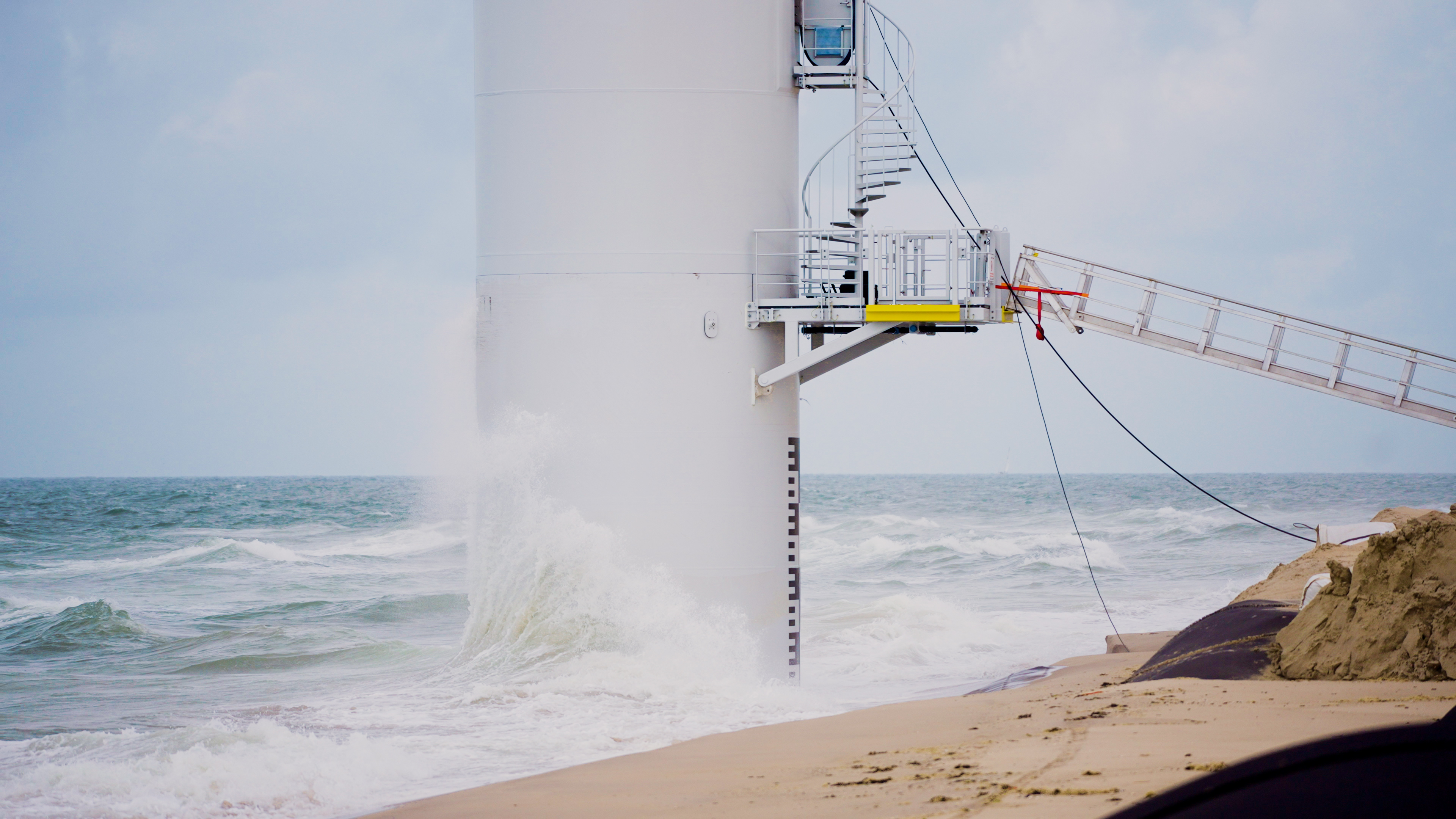
Ballast Nedam successfully deployed the onshore monopile foundation at Windpark Maasvlakte 2, located along the sea defences of the Port of Rotterdam.The project includes 22 wind turbines with a combined capacity of 166.7 MW, supplying more than 400 GWh of renewable energy annually to Rijkswaterstaat (the Dutch national agency for infrastructure and water management) - enough to power over 150,000 households.
The turbines are positioned across two very different terrains:
- Hard sea defences with rock-reinforced dikes (concrete foundations)
- Soft sea defences with sandy beaches and dunes (monopile foundations)
Why It Works
Monopile foundations provide crucial benefits in areas with challenging soil, tight access, or environmental constraints:- Speed – faster construction and grid connection
- Efficiency – logistically compatible with turbine components
- Sustainability – fewer emissions and minimal ground disturbance
- Flexibility – suitable for previously inaccessible sites
Safety, Collaboration, and Compliance
Safety has been a core value throughout the project. In line with Ballast Nedam’s Safety Culture Ladder Level 4 ambition, risk assessments, training, and planning were embedded from day one.The project’s success also reflects strong collaboration with key partners, including Rijkswaterstaat, the Municipality of Rotterdam, the Ministry of Economic Affairs, and others.
The monopile system has also received a DNV GL Statement of Compliance, confirming its readiness for widespread adoption.
Looking Ahead
With the Netherlands aiming to generate 70% of its electricity from renewable sources by 2030, innovations like the onshore monopile will be essential - not just to build faster, but to build smarter.The onshore monopile is more than an engineering breakthrough. It’s a smarter foundation for a more resilient wind-powered future, shaped by Ballast Nedam’s deep-rooted offshore expertise.